Cultural Challenges Couples Face in Love Marriages in India

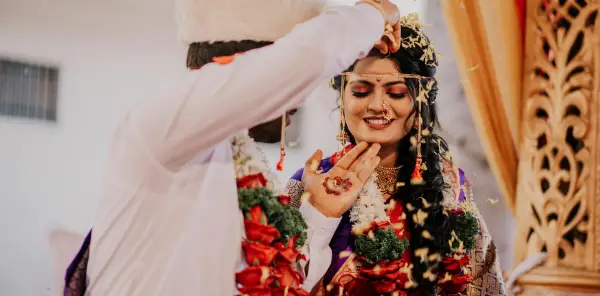
Choosing a life partner on your own is an amazing process. Although love marriages are gaining popularity in India, they usually encounter some specific barriers. Many of these challenges are commonly seen in problems couples face in love marriage situations across the country. The couple may be immersed in their love, but the outer world, particularly the families, might still be stuck on traditions. Firstly, we shall identify the cultural obstacles that couples encounter and also discuss their ways of overcoming them.
What Are Cultural Challenges in Love Marriages?
Cultural barriers can be thought of as an invisible fence that separates people. It’s composed of dissimilar beliefs, customs, and traditions. In India, a wedding is commonly perceived not only as a partnership between two individuals but also a union of two families. The differing cultural backgrounds of the couple can raise “walls” in the families’ minds, making it challenging for them to accept and understand the new relationship, especially in intercaste love marriage scenarios.
Common Cultural Challenges Faced by Couples
1. Caste-Based Differences
Caste has been a longstanding social system in India. A lot of parents still expect their children to marry within the same caste while maintaining the same set of values. However, any outsider to the caste will be viewed as a threat to the tradition and might even lead to a social stigma. This is one of the biggest inter caste love marriage problems faced by couples today.
2. Inter-Religious Love Marriages
Faith plays an important role in the lifestyle of Indians. Getting married to a person of a different religion might make the family wonder how they will bring up their children and which religious celebrations they shall abide by. These situations often overlap with problems in love marriages where belief systems clash.
3. Religious Differences
Differences in the religious sect or manner of worship can cause serious disagreements. The couple may think that their small rituals are insignificant while the elders place a lot of importance on them.
4. Family Opposition
Getting parents’ blessings is considered very important in India. If parents don’t approve, even if the couple is happy, they may feel guilt or loneliness. This emotional stress is one of the common problems couples face in love marriage journeys.
5. Regional and Language Differences
The analogy is that India is not one but many countries. Northerners and Southerners may speak different languages and eat different foods.
6. Financial and Social Status Differences
A significant wealth difference between the families may lead to the emergence of the “power gap.” Besides, families may be concerned about the capability of the couple to uphold the standard of living.
7. Astrology, Age Gaps, and Auspicious Timing
Many Indian families are into Kundali (horoscopes). If the stars don’t “match, ” or if the age difference is large, parents may think the marriage could bring them bad luck.
8. Geography & Mobility
At times, distance alone could be the problem. If the wedding leads to a relocation far away or to another country, the family might worry about losing the connection to their child.
Why Families Oppose Love Marriages in India
One of the reasons why parents reject love marriages is that they fear the unknown. They are worried about “what the neighbors will say” (log kya kahenge). Besides, they want to make sure their son/daughter is safe and secure, and, to achieve this, they consider traditional matches to be the safest ones—especially in cases of love marriage inter caste relationships.
How Cultural Barriers in Love Marriages Vary Across India
- North India: This is the land of strong cultural values and traditions. People here usually consider preserving honor and family’s status as their main goals.
- Urban vs. Rural India: Villages strictly follow traditions, whereas in cities, people have more liberal attitudes.
- South India: In spite of high literacy levels, many households there continue to maintain a great deal of reverence for ancestral rituals and family line.
- Metro Cities vs. Tier 2 & Tier 3 Cities: In major cities like Mumbai or Delhi, love marriages are considered “normal.” On the other hand, in smaller towns, they are still a big source of talks.
- The NRI Factor: Indians living abroad generally combine cultures. However, when they come home to get married, they might be subjected to pressure to stick to “pure” roots.
Impact of Cultural Barriers on Couples
In fact, love struggles can be so exhausting that they cause anxiety and depression and even introduce tensions to the relationship. For some couples, the dilemma of having to decide between their partner and their parents is so heart-wrenching that it seems impossible.
How Couples Can Overcome Cultural Barriers
1. Open Communication with Family
Gather the family members around one table and voice your feelings. Don’t get into confrontation; kindly convey your message. You can make your parents understand that your partner is a decent person who respects them.
2. Building Mutual Respect for Traditions
Understand each other’s culture and share your respective traditions with each other. The initiation of such exchanges on a personal level normally makes the parental families feel that you are part of their culture.
3. Seeking Counseling or Mediation
It is a common practice to resort to a family member who is respected by all sides, such as an uncle, or to get professional help from a counselor.
4. Legal Support
For cases that are too complicated, there are provisions in India such as the Special Marriage Act, which allow individuals from different faiths or castes to have a legal and safe wedding.
Changing Trends: Is India Becoming More Accepting?
Definitely! Attitudes are changing. Better education and social media have led to young people understanding that one’s character is what truly matters and not castes. More and more families are prioritizing their children’s happiness over sticking to outdated rules.
Conclusion
Love marriages in India can be a roller coaster of emotions with ups and downs. On one hand, cultural differences pose a big hurdle, especially in inter-caste love marriage cases, but on the other hand, they can be overcome. With love, understanding, and good communication, almost any wall can be taken down.
FAQ's of Challenges of Love Marriage in India
Why have Indian parents resisted intercaste love marriages?
Mostly, they worry about a fall in their social image or they think that different traditions will result in frequent quarrels.
How can couples navigate language barrier issues from their in-laws?
Your partner can be the “bridge” for translation between the two sides, and you can also learn a few basic words and phrases in their language. It is a great way to demonstrate that you care!
What should I do if my parents disown me because of an Intercaste marriage?
Time usually heals such wounds. Typically, once they witness that you are happy and secure, they might be slowly reintegrating into your life. However, do rely on friends or legal counselors if necessary.
Can cultural differences enhance a marriage?
Absolutely! It gives you the chance to celebrate a wider range of holidays, try out a variety of cuisines, and gain a broader perspective of life.
How to handle cultural differences in marriage?
Concentrate on common principles such as honesty and kindness. Treat minor dissimilarities as amusing learning experiences rather than the reasons for fights.
admin
Table of Contents
You might also like: