Court Marriage Process in India

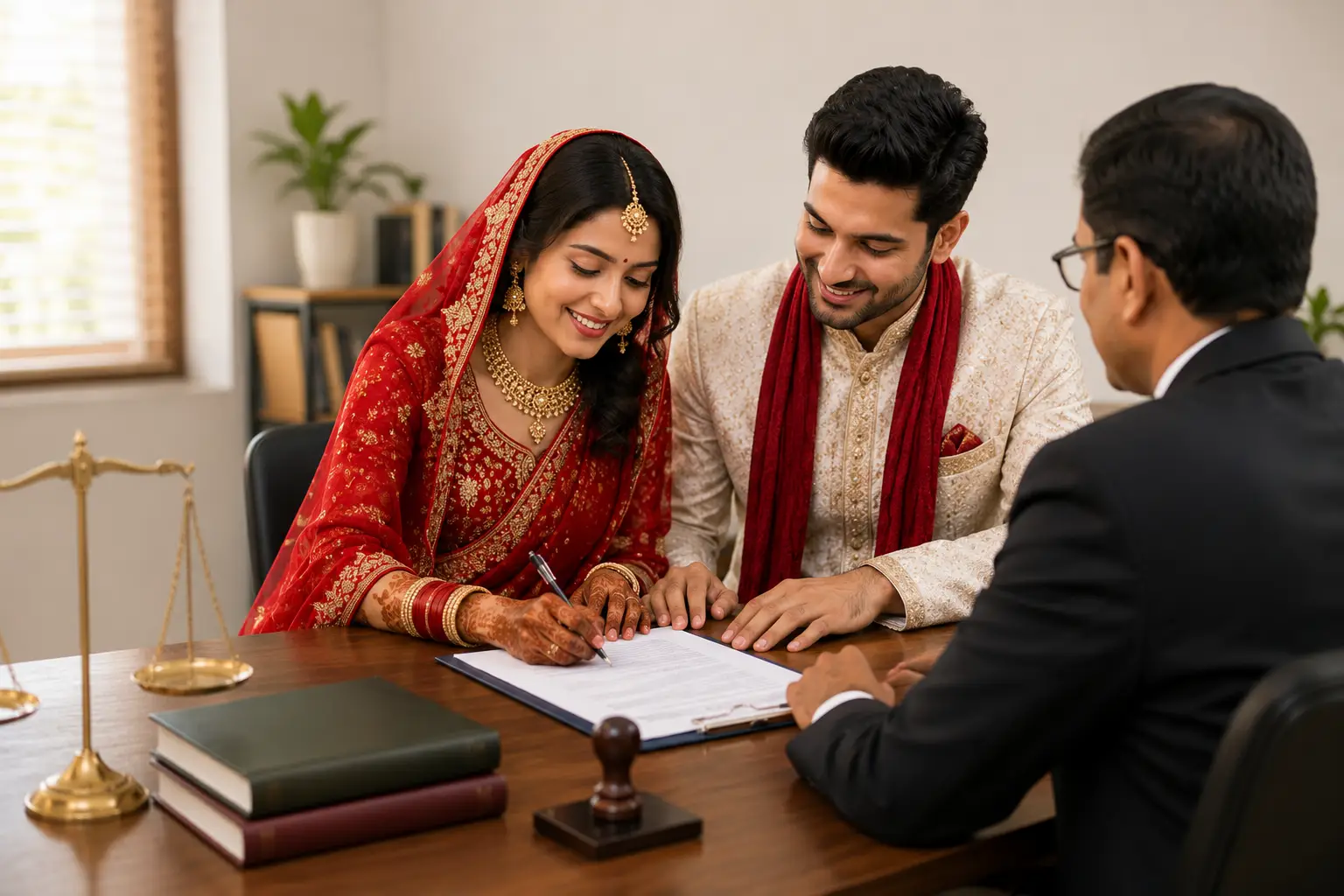
Marriage is a lifetime milestone. One that unites not just two people but also families, responsibilities and aspirations. In India, marriage is highly governed by tradition and customs, but the institution of court marriage has increased steadily. Court marriage is a legal process based on the Special Marriage Act, 1954. It facilitates two individuals to marry legally.

There is no boundary of religion, caste or social standing. The process is formal, inclusive and transparent. Couples have the autonomy to marry voluntarily. With increasing numbers of young Indians giving importance to education, jobs and autonomy, court marriage is turning out to be a viable choice. Let’s discuss all facets of it—from eligibility and documents to procedure, rights and challenges. A court marriage is a simple and legal method of tying the knot without integrating any religious rituals. It is conducted right before a government officer who is known as the Marriage Officer. This method can be utilized by any two persons irrespective of their caste, religion, or social backgrounds. It is all about the legal connection that binds two persons.
What is the meaning of Court Marriage in India?
Court marriage is a wedlock sanctioned under legal authority, solemnised in the presence of a marriage officer, typically at the Sub-Registrar’s office. It does not involve a priest, ritual or religious traditions as demanded by religious rituals. The marital bond is entirely based on legal understanding under the Special Marriage Act, 1954.
It offers a method for interfaith, inter-caste or intercultural couples to get married. Marriage can be without converting to the spouse’s religion. Or without executing rituals that are not part of their beliefs. It is especially helpful for interfaith, inter-caste or intercultural weddings. The marriage acquires identical legal status as any other registered marriage in India once solemnised.
Benefits of Court Marriage
If you choose this option, a couple can get many benefits to live their new life together in a very simple manner.
- Legal Recognition: This method provides you with an official legal document that proves your marriage. The government issues you an official certificate, which is globally recognized. This will definitely help you to steer clear of any legal troubles or confusion regarding your relationship in the future.
- Quick and Hassle-Free: There is no necessity for you to wait and prepare a big event for months with hundreds of guests. The process is quite simple, clear, and is regulated by the government norms. It also saves you from the anxiety and the hard work of arranging a traditional wedding.
- No Religious Constraints: Couples belonging to different religions can get married without converting or changing their faith. Your personal beliefs are respected by law and no religious ceremonies are required. It is a wonderful way of expressing love which does not give rise to any social barriers.
- Privacy: If you want a quiet day, then this is the right choice for you. All you need is a few close friends or relatives who will become your witnesses. This option allows you to keep your special day personal, peaceful, and far away from unwanted social attention.
Who is Eligible for Court Marriage in India?
The eligibility is strictly regulated by law in order to avoid misuse. There is a bar on the groom’s and bride’s ages. Both should be above the legal age of marriage. Also, both should be in sound mental health. The bride and groom should be unmarried at the time of the court marriage. And, should have free will to marry each other. Below are the eligibility criteria –
- Age Requirement – The bridegroom should be 21 years or older, and the bride should be 18 or older.
- Mental Fitness – Both individuals should be of sound mind and capable of comprehending the implications of marriage.
- Unmarried Status – Neither individual should have a living spouse when getting married.
- Free Consent – Both parties should give their free consent to marry without coercion or undue influence.
- Prohibited Relationships – The couple should not be within the degrees of prohibited relationships as stated in the Act, unless allowed by their customs.
Essential Documents for a Court Marriage in India
Documents play a central role in the process of authenticating the marriage. A full set of complete documents fast forwards the process. You will get all your formalities done in very few visits. Below are the essential documents for the court marriage in India –
- Application Form – Duly filled and signed application form for intended marriage.
- Proof of Age and Identity – Birth Certificate, Aadhaar Card, Passport, PAN card
- Address Proof – Documents such as Voter ID, Electricity or Utility Bills, Driving Licence to establish residential proof.
- Passport-sized Photographs – Fresh, colored photographs of both parties.
- Affidavit – Affidavit that states date of birth, marital status, nationality and relationship status.
Step-by-Step Process for Court Marriage in India
The procedure is systematic and has to be adhered to carefully. It involves a few steps like applying for the marriage, display of the marriage notice, document verification and the ceremony. Below is the step-by-step guide for the complete process –
1. Filing a Notice of Intended Marriage
The couple is required to submit a written notice to the marriage officer. The marriage officer should be of the area where at least one of the partners has been residing for 30 days.
2. Marriage Notice Display
Once the application/notice is filled, it is posted on the board of the Sub-Registrar’s office. The duration for notice display is 30 days. This time period is given to raise objections, if any.
3. Verification of Documents
In the meantime, the officer checks all documents and affidavits submitted. If all is well, approval is issued. After the approval, the couple can finalise the marriage date.
4. Marriage Ceremony
The marriage can be solemnised after 30 days of the Marriage Notice Display. The marriage takes place in the presence of the officer and three witnesses. The ceremony is very straightforward. It includes a simple signing of the marriage register and a formal declaration.
5. Place of Marriage
Marriage is typically performed in the Sub-Registrar’s office or any other government-appointed office.
6. Marriage Certificate
Once a marriage has been solemnised, a certificate of marriage is handed over. A certificate is the legal evidence of marriage and can be accepted for all official matters, such as visas, bank accounts, property and inheritance.
Legal Rights After Court Marriage
Court marriage ensures that couples receive equal legal rights under Indian law. Below are the list of rights that couples have after a court marriage –
- Right to Marital Property – Both partners have rights over shared property acquired during marriage.
- Right to Alimony – In divorce, either of the spouses can claim maintenance.
- Right to Adoption – Spouses acquire the legal right to adopt children.
- Right to Tax Benefits – Spouses are eligible for income tax benefits and concessions.
- Right to Live Together – Marriage gives legal status to living together.
- Spousal Benefits – Spouses can receive pension, insurance and other spousal benefits.
Common Myths About Court Marriage
There are numerous common misconceptions about this uncomplicated procedure. In fact, it’s a licensed and legitimate procedure totally supported by the Government of India.
- Myth: Court marriage is an illegal or secret wedding
Fact: A court marriage is absolutely legal and is recognized by the Government of India. - Myth: It only requires a day
Fact: It takes a minimum of 30 days due to the mandatory public notice and objection period. - Myth: No need for any witnesses
Fact: Legally, you must have three witnesses with valid ID cards to solemnize and complete your marriage registration. - Myth: It is very costly
Fact: The government fee is very small and almost everyone can afford it.
Duration & Fees for Court Marriage Registration
The full process takes about 30 to 40 days because of the statutory waiting period. The government application fee is very inexpensive and normally ranges between 100 to 500 Rupees depending on the state. On the other hand, if you hire a professional lawyer for the documentation process, their service fees will be extra.
Conclusion
Marriage in court is not only a legal process—it’s an embodiment of personal choice and freedom. In a country as multicultural as India, where cultures and traditions are quite diverse, it provides a secular and homogeneous method for the couple to come together. Although there may be paperwork to fill out and waiting times, the advantages take precedence over the setbacks. It provides legal protection, equality and recognition of the union. For those wanting an affordable, open and democratic option, court marriage is a convenient option.
FAQ's
What is the time limit for marriage registration?
The couple has to solemnize the marriage within three months of issuing the notice, or else a fresh notice has to be issued.
How long does it take to get the marriage certificate?
It is generally issued the same day after the ceremony, subject to the fulfilment of all requirements.
Do we need witnesses?
Yes, there are three adult witnesses with valid ID evidence required for marriage.
Is it compulsory to live together after a court marriage?
No. Only marriage is legalised by the law; residence is an individual preference.
How long does it take to get a date for a court marriage in India?
Typically, a date is scheduled 30 days from publishing the notice, subject to the registrar’s availability.
admin
Table of Contents
You might also like: